

Key Takeaways on Cubicle Configurations:
- When planning office cubicle configurations, factor in your team’s work style, available square footage, privacy and noise requirements, technology needs, scalability and aesthetic or culture goals.
- Standard cubicle sizes (6×6, 6×8, 8×8) suit general, multitasking or executive roles, while smaller 4×2 or 5×5 stations work well for hot‑desking in bullpen‑style spaces.
- For creative office cubicle design in hybrid workplaces, choose modular walls, height‑adjustable desks, shared team pods and freestanding panels to keep layouts flexible as your needs evolve.
The way your office is laid out should revolve around how your team works. Whether you’re building a space for quiet focus, open collaboration, or a hybrid of both, choosing the right cubicle configuration can make or break productivity.
At SUNLINE Office, we help businesses of all sizes design and install smart, flexible cubicle floor plans tailored to how your teams actually work. Below, we’ll break down the most common office cubicle configurations, how to choose the right setup for your space, and what to consider as your office needs evolve.
What Are Cubicle Configurations?
Cubicle configurations refer to how cubicles are arranged and connected within an office space.
These layouts directly affect workflow, communication, noise levels, and employee satisfaction. While the cubicle itself might seem simple—a desk, dividers, and storage—it’s the overall cubicle floor plan that shapes how effectively your team can work together or independently.
Common Office Cubicle Configurations
While every office is different, there are some standard configurations that many corporate employees will be familiar with.
Let’s walk through the most popular office cubicle configurations and when they work best.
1. Linear or Straight-Run Cubicles
Think of this as the classic row setup. Cubicles are arranged in a straight line, often back-to-back or side-by-side.
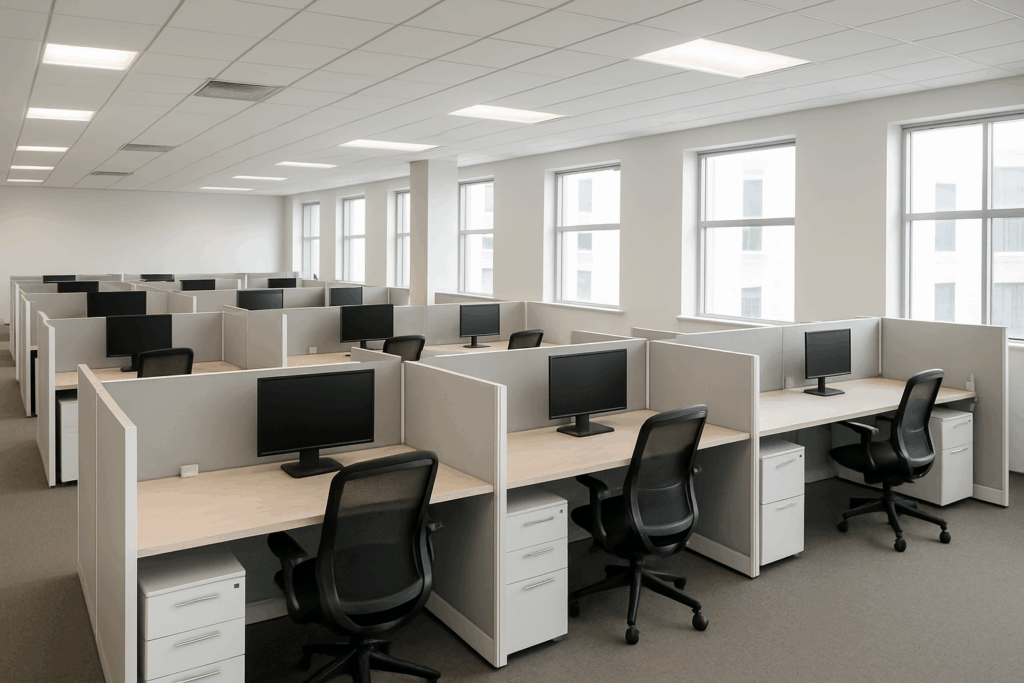
Best for:
- Call centers or structured departments (sales, customer service)
- Long, narrow office spaces
- Environments where space maximization is a priority
Pros:
- Easy to scale up or down
- Simple power/data layout
- Clean and efficient design
Cons:
- Less collaborative
- Can feel repetitive
- Can feel impersonal without thoughtful design
2. Clustered Workstations
Cluster cubicles group 3–6 workstations in pods, usually arranged in a circular or pinwheel layout.

Best for:
- Teams that collaborate frequently
- Project-based departments
- Supervisors who oversee smaller teams
Pros:
- Supports quick communication
- Offers more privacy than open-bench setups
- Ideal for shared resources in the middle of the cluster
Cons:
- May require more floor space per employee
- Not ideal for confidential work
3. Bullpen Layouts
Bullpen-style cubicles are open and minimal, typically without full-height panels. Workstations are aligned in a grid and often share common desk surfaces.
Best for:
- Startups
- Creative teams or sales/marketing departments
- Offices with a strong in-person culture
Pros:
- High energy and easy collaboration
- Efficient use of open space
- Encourages transparency
Cons:
- No sound or visual privacy
- Can be distracting
4. Private Office Cubicles
Private office cubicles are high-panel cubicles (typically 67” or more) that provide enclosed workspaces resembling a small private office.

Best for:
- Managers or team leads
- Hybrid or remote-focused teams that need heads-down space
- Law firms, HR, and finance
Pros:
- Excellent for focused work
- Professional appearance
- Adds privacy without full walls
Cons:
- Uses more square footage
- Less flexible for reconfiguration
5. Reception Cubicle Configurations
Modular cubicle walls can also be used to design reception areas with built-in desks and branding elements.
Best for:
- Front desk or visitor check-in zones
- Offices that want a cohesive design from front to back
Pros:
- Cost-effective compared to custom millwork
- Can be styled to match cubicles elsewhere in the office
- Easy to upgrade or reconfigure
Choosing the Right Cubicle Floor Plan
Maximizing your space is just as important as building a comfortable and productive work environment. It takes a fine balance between these and several other components to get your office space planned out just right.
When building out your cubicle layout, consider these six key factors:
- Work Style: Are your teams independent or collaborative? Do they need heads-down focus or quick access to one another?
- Office Size: Maximize square footage while leaving enough clearance for walkways, ADA compliance, and shared spaces.
- Privacy Needs: Determine the right panel height and materials (fabric, laminate, glass) based on the need for acoustic and visual separation.
- Technology Requirements: Plan for cable management, monitor arms, sit-stand desks, and integrated power/data.
- Scalability: Will your headcount change soon? Modular cubicles allow for growth or downsizing without starting from scratch.
- Aesthetic and Culture: Your cubicle layout sends a message—make sure it reflects your brand, values, and the work you want to support.
Cubicle Sizes & Standards
While cubicle sizes can be customized, here are the most common dimensions:
- 6’x6’ – Ideal for administrative or general office tasks
- 6’x8’ – Extra surface area for multitasking or dual monitors
- 8’x8’ – Executive or manager workstations
- 4’x2’ or 5’x5’ – For hot desks or flex work in bullpen-style layouts
Need to fit a specific number of cubicles in your space? SUNLINE Office offers cubicle planning services to help you design the perfect cubicle floor plan.
Modern Cubicle Options for Hybrid Workplaces
The return of the cubicle isn’t necessarily about nostalgia; rather, the need for offices to take into account function and how to best support their teams. Today’s office cubicle configurations are smarter, sleeker, and built for flexibility.
- Modular Cubicles: Easily reconfigure layouts as teams grow or shift
- Height-Adjustable Workstations: Support health and productivity
- Shared Team Pods: Combine collaboration with individual work zones
- Freestanding Panels: Add privacy without permanent walls
Whether you need a few focused workstations or a full office reconfiguration, SUNLINE can help you map out a floor plan that supports your team’s evolving needs.
Ready to Design a Smarter Cubicle Floor Plan?

SUNLINE’s collection of contemporary office furniture includes everything from sleek office partitions to ergonomic office workstations and stylish office cubicles—all designed to elevate your work environment without stretching your budget.
Contact us today to get started with a custom cubicle floor plan that fits your team and your budget.