

Office Space Planning at a Glance:
- Start by measuring your space and headcount to map out efficient office furniture arrangement, from workstations to break areas.
- Design zones that match your team’s workstyles—quiet nooks for deep focus, open hubs for brainstorming, and lounge areas for casual meetups.
- Mix open plans and private stations with modular cubicles or team pods for flexibility and balanced privacy.
- Keep safety and compliance top of mind by maintaining proper aisle widths, lighting, and ventilation.
A well-planned office doesn’t just look better, it works better. Whether you’re moving into a new space or rethinking the one you’ve had for years, office space planning is where it all begins. It’s the blueprint behind how your team works, collaborates, and finds focus.
Getting it right can boost productivity, improve morale, and make your day-to-day operations run more smoothly. But, where do you start?
This guide will help you learn the basics of office space planning, enabling you to execute your ideas to perfection.
What Is Office Space Planning?
Office space planning is the process of arranging office furniture, workstations, and common areas in a way that best supports the way your team functions. It’s about being intentional — making sure every square foot serves a purpose, whether that’s heads-down work, quick huddles, or creative brainstorming sessions.
This includes everything from big-picture decisions, such as choosing a cubicle office layout versus an open floor plan, to details like desk orientation and storage placement.
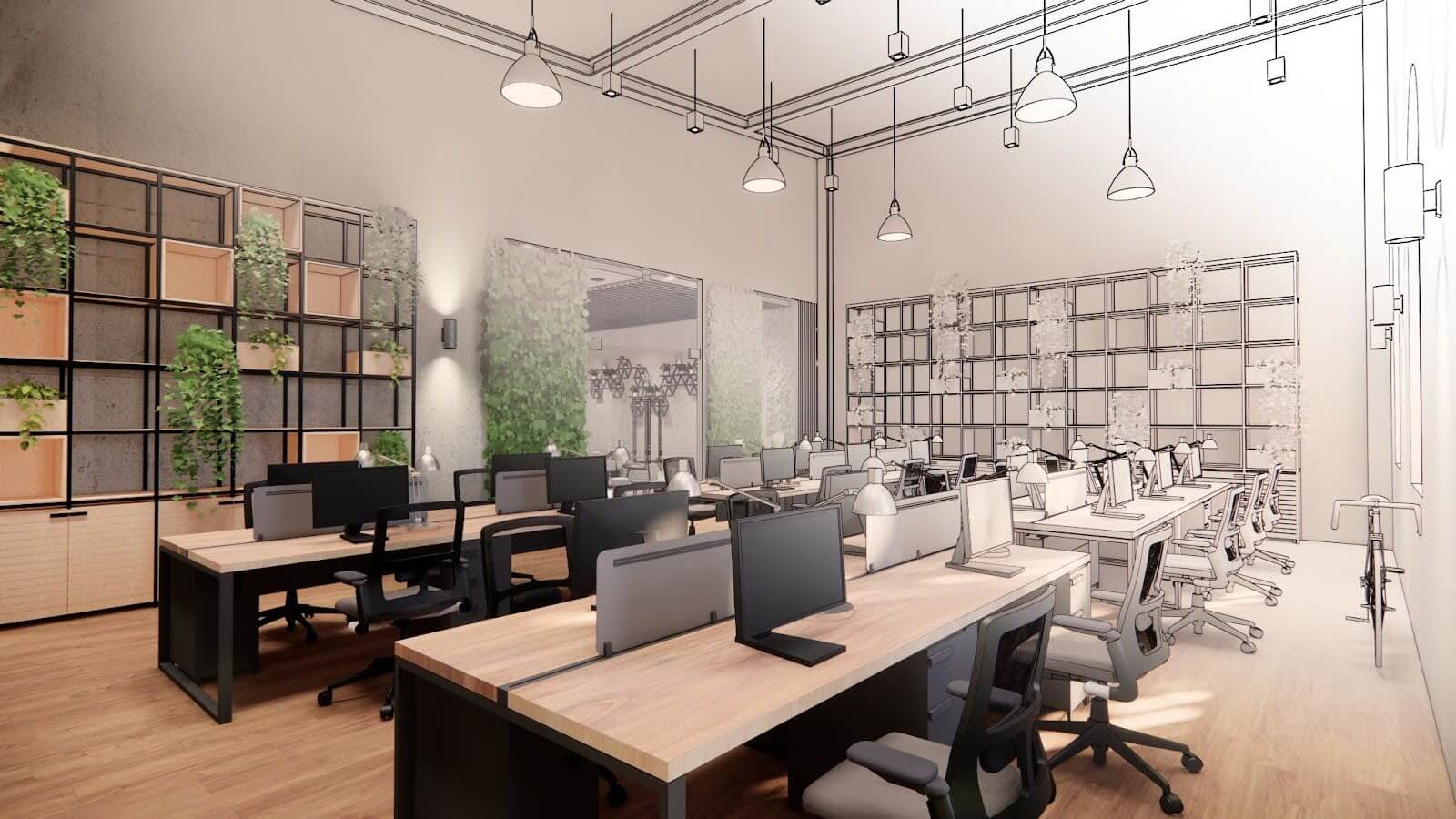
What to Consider Before Laying Out Your Office
Office furniture layout isn’t a one-size-fits-all job. There are a handful of factors to think through before diving in.
1. How Much Space Are You Working With?
Start with the square footage. Measure everything — including hallways, wall projections, windows, and any odd corners. Once you know your actual usable space, you can begin to think through where workstations, meeting rooms, break areas, and storage spaces can be located.
2. How Many People Are You Planning For?
The number of employees (and their work styles) will shape your layout. Are you planning individual desks for everyone? Shared hot desks? Private offices? If you’re growing fast, building in extra capacity now will save you a headache later.
Need help visualizing? Our 6×6 cubicle layout guide offers ideas for optimizing smaller footprints without sacrificing comfort.
3. Your Team’s Workstyle
Some teams need quiet corners for deep focus. Others thrive in open spaces with constant collaboration. Many need both. Your office space planning should reflect how your team naturally works, not just how you wish they worked.
That could mean setting up zones: quiet areas, collaborative hubs, private stations, and break spaces. Our Office Design Guide dives deeper into creating a layout that supports diverse workstyles.
4. Your Office Culture and Aesthetic
Modern, minimalist, industrial, cozy; your space should feel like an extension of your brand and values. Office furniture layout ideas should support the kind of environment you want to create.
If your culture is casual and team-oriented, a more open and flexible setup might make sense. If privacy and structure are more important, cubicles or enclosed offices may be a better fit.
Curious how modern cubicles can still feel open and fresh? Check out some more examples in our modern office cubicles article.
5. Your Budget
You don’t have to spend a fortune to create an efficient office layout. Planning ahead enables you to make informed, cost-effective decisions. For help balancing style, function, and budget, check out our Office Furniture Buying Guide to get a better sense of where to splurge and where to save.
6. Fixed Features and Building Constraints
Windows, doors, columns, fire exits — these aren’t moving. So make sure your layout works with these elements, not around them. Blocking a fire exit with a filing cabinet or cramming a desk in front of a window might seem fine in the short term, but it’ll create long-term frustration.
7. Compliance and Safety
Don’t forget to follow OSHA guidelines and local building codes. That includes maintaining proper aisle widths, ensuring electrical access is up to code, and providing adequate lighting and ventilation.
Good design supports safety, too.
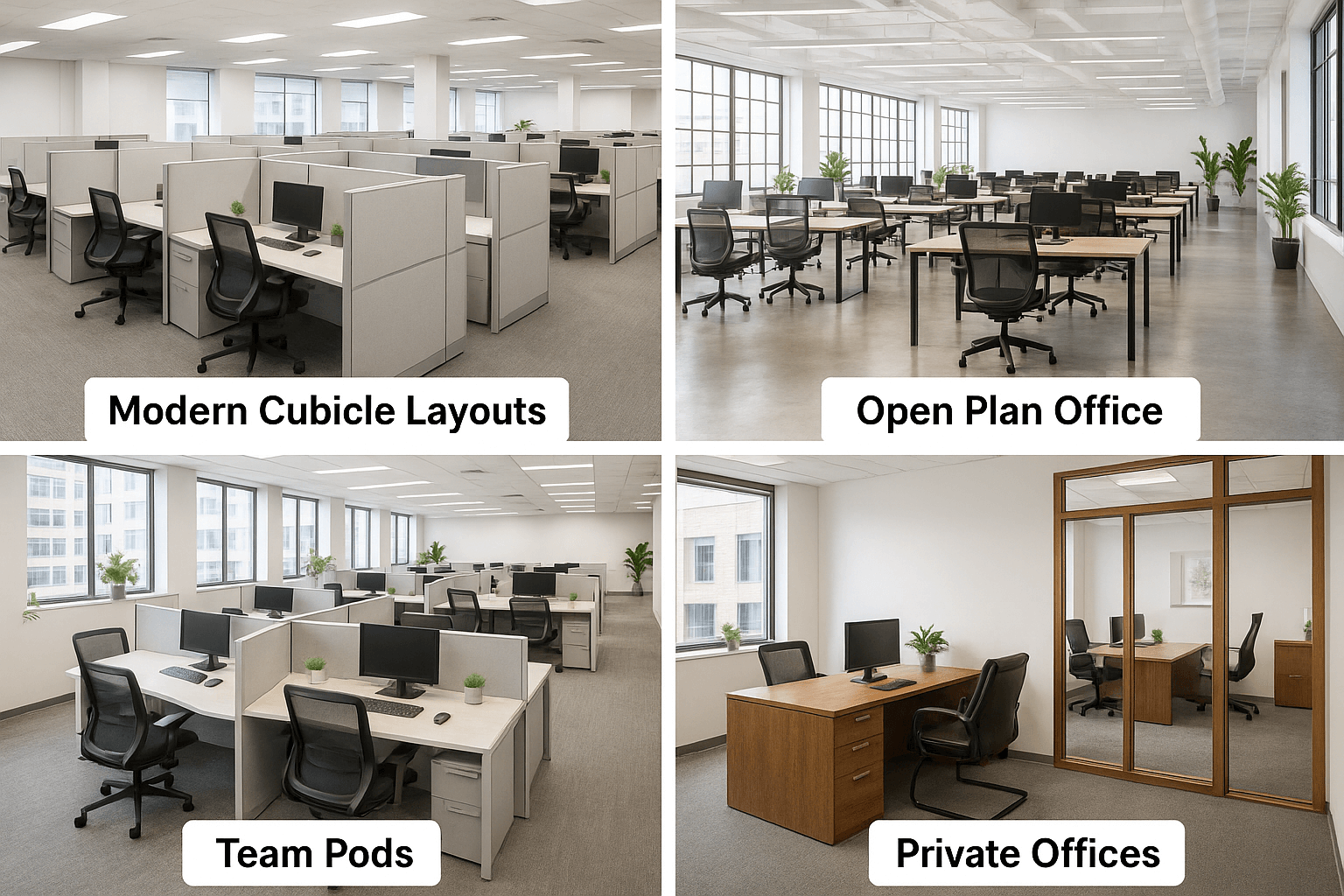
Office Furniture Layout Ideas to Explore
When it comes to laying out furniture, you’ve got options. The right one depends on your space, team, and workflow.
Here are a few common office furniture layout ideas to consider:
- Cubicle Office Layouts: Great for focused work, privacy, and clear boundaries. Cubicles have come a long way — today’s versions can be sleek, flexible, and surprisingly open.
- Open Office Plans: Encourage collaboration and easy communication. Be sure to incorporate quiet zones or phone booths to mitigate noise.
- Team Pods: Small clusters of desks for 3-6 people, ideal for departments or project-based teams.
- Private Offices: Best for leadership, HR, or roles that require confidentiality.
- Hot Desking or Flex Desks: Maximize space for hybrid or remote-first teams by providing desks on a rotating basis.
- Lounge & Breakout Areas: Break rooms aren’t just for lunch. These spaces can double as casual meeting zones or creative thinking spaces.
Tips for Smarter Office Space Planning
If you’re still not sure where to begin, these simple principles can guide you toward a layout that makes sense:
- Don’t overcrowd: A packed office feels chaotic. Leave breathing room for comfort and future growth.
- Mix open and private spaces: Variety supports all types of work, from collaborative to focused and everything in between. A glass wall system can help you maintain privacy while making the space feel open.
- Leverage natural light: Position desks to maximize the benefits of windows where possible. It lifts moods and reduces eye strain.
- Use furniture that works harder: Consider modular desks, ergonomic seating, mobile storage, or cubicles that can be reconfigured as your needs change.
Leave room to evolve: Your layout should be flexible enough to shift as your team changes.

Office Space Planning Your Way
Office space planning isn’t just cramming in desks and calling it a day. It’s about shaping a space that works with your team, not against them. The layout sets the tone — how people move, focus, meet, and feel throughout the day.
Maybe you’re rethinking a cubicle setup that’s seen better days. Or perhaps you’re starting fresh, looking for office furniture layout ideas that don’t feel cookie-cutter. Either way, we’re here for the big-picture stuff and the details.If you’re not sure where to begin, that’s what we’re here for. Contact us today and let’s plan something that fits your team like a glove.