

TL;DR / Key Takeaways
- Are ergonomic chairs worth it? Yes, they support posture, reduce back pain, and improve productivity, making them cost-effective over time.
- Do ergonomic chairs work? Studies and real-world use show they reduce strain by aligning the spine, supporting the lower back, and allowing adjustments for different body types.
- What is an ergonomic chair? A chair designed with adjustable features (height, lumbar support, armrests, tilt) to fit the person, not the other way around.
- Task chair vs desk chair: A task chair is generally more adjustable and supportive for long hours, while a standard desk chair may be simpler and less customizable.
- Bottom line: If you or your team spend more than a few hours a day at a desk, ergonomic chairs are one of the smartest investments you can make for comfort, health, and productivity.
What Is an Ergonomic Chair?
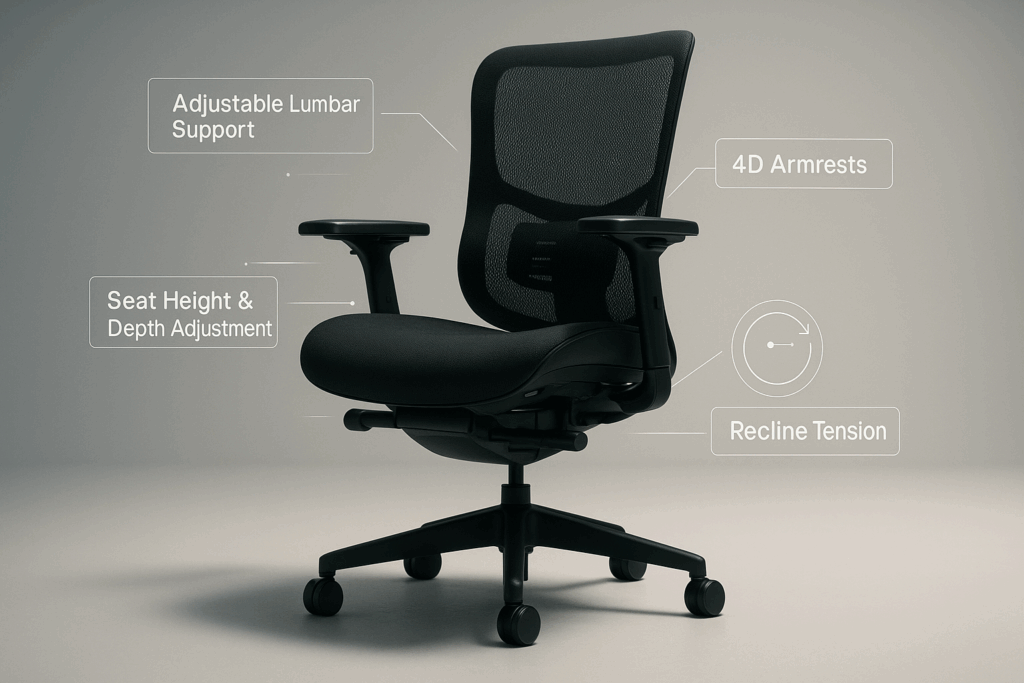
Before deciding if ergonomic chairs are worth it, it helps to define the term. An ergonomic chair is built to support the human body’s natural posture and movement during long periods of sitting. Unlike a basic desk chair that may only adjust up or down, ergonomic chairs usually include:
- Adjustable seat height and depth
- Lumbar support that moves with the curve of your spine
- Armrests that adjust for width, height, or angle
- Tilt and recline options to keep circulation flowing
- Materials (mesh, fabric, leather) designed for comfort and breathability
The goal is simple: to prevent the fatigue, back pain, and slouching that come from sitting in a chair that forces your body into one fixed position.
At Sunline, ergonomic options like the Ergo Plus and Ergo Multi-Purpose Chair are designed with these principles in mind, giving teams seating that adapts to individual needs rather than making employees adapt to the chair.
Do Ergonomic Chairs Work?
The short answer: yes. The longer answer is that they work because they’re designed to fix the problems that regular office chairs create.
A poorly designed chair puts pressure on the lower back, restricts blood flow in the legs, and encourages slouching. Over time, that leads to pain, stiffness, and in some cases repetitive strain injuries.
An ergonomic chair works by distributing weight more evenly and letting the user make small adjustments to maintain good posture.
Benefits backed by use and research:
- Pain reduction: Ergonomic chairs with proper lumbar support reduce lower back discomfort, one of the most common workplace complaints.
- Better posture: Adjustable backrests and seat depth encourage sitting with feet flat, spine aligned, and shoulders relaxed.
- More energy: Sitting without strain means fewer breaks to stretch and recover, leaving employees more focused.
- Long-term health: By preventing strain-related injuries, ergonomic seating can reduce sick days and even healthcare costs over time.

Task Chair vs Desk Chair
These two terms get thrown around a lot, but they’re not always the same thing.
- Desk chair: A general category or any chair intended for use at a desk. These can range from simple, low-cost models with limited adjustability to more advanced ones.
- Task chair: A type of desk chair, but specifically designed for people who spend long hours at their desk. Task chairs usually offer more ergonomic features like adjustable lumbar support, tilt tension, and armrests.
Think of it this way: all task chairs are desk chairs, but not all desk chairs are task chairs. If you’re sitting at a desk for 8+ hours a day, a task chair (especially one with ergonomic features) is the smarter investment.
The True Value: Are Ergonomic Chairs Worth It?
Yes, ergonomic chairs often cost more upfront than a simple desk chair. But what you’re really buying is long-term value.
1. Health and Comfort
Back pain is one of the leading causes of lost productivity in the workplace. An ergonomic chair pays for itself by preventing discomfort that could lead to medical issues, time off, or reduced performance.
2. Productivity Boost
Comfortable employees are focused employees. When workers don’t have to constantly shift, stand, or stretch to relieve discomfort, they stay in flow longer.
Even at a home office, the difference between a cheap chair and an ergonomic chair can mean hours of better work each week.
3. Longevity
Cheap chairs wear out quickly: cushions flatten, levers break, wheels stick. High-quality ergonomic chairs are built to last, often 10 years or more with proper care. That means fewer replacements and lower long-term costs.
4. Morale and Retention
Providing good seating isn’t just about function. It signals to employees that their health and comfort matter. That kind of investment can improve morale and even reduce turnover.

Features to Look for in an Ergonomic Chair
If you’re comparing options, here’s what separates a true ergonomic chair from just a padded seat on wheels:
- Height and Seat Depth Adjustments: Supports users of different sizes, keeps feet flat on the floor, and avoids pressure on thighs.
- Lumbar Support: Adjustable and contoured to maintain the spine’s natural curve.
- Backrest Height: Enough to support the upper back, with some models offering headrests.
- Armrest Adjustability: Lets shoulders stay relaxed and elbows supported.
- Material: Mesh for breathability, leather for executive style, or padded fabric for balance of comfort and durability.
- Mobility: Smooth-rolling casters for moving between tasks.
Sunline’s ergonomic seating line checks these boxes, offering options from lightweight mesh models to high-back chairs with advanced lumbar systems.
Cost vs. Return on Investment
It’s fair to ask: Do ergonomic chairs work well enough to justify the higher price tag?
- Basic desk chairs ($50–$200): Limited adjustments, minimal support, shorter lifespan.
- Mid-range ergonomic chairs ($300–$700): Multiple adjustments, better materials, long-lasting.
- Premium ergonomic chairs ($800–$1,200+): Maximum adjustability, advanced lumbar and headrest options, 10+ year lifespans.
While the initial spend is higher, the ROI comes from fewer health complaints, reduced absenteeism, improved productivity, and less frequent replacement cycles. For many companies, even a small reduction in turnover or sick days offsets the cost.

Final Thoughts: Which Chair Is Right for You?
So, are ergonomic chairs worth it? If you or your employees spend more than a few hours a day at a desk, the answer is yes. They’re not just “comfortable chairs”, but tools that protect health, improve performance, and last longer than the alternatives.
- Choose a desk chair if budget is your only concern and usage is minimal.
- Choose a task chair with ergonomic features if long hours and employee well-being matter.
- For the best long-term value, invest in a fully ergonomic chair that adjusts to fit the individual, not the other way around.
At the end of the day, a chair is the foundation of daily work. Ergonomic chairs are worth it because they keep people healthier, happier, and more productive.