
Key Takeaways
- Hybrid and flexible layouts dominate modern office design.
- Employee well-being and sustainability are central priorities.
- Technology and immersive spaces enhance productivity and collaboration.
- Offices are becoming expressions of culture, creativity, and local identity.
Workspaces are no longer just places to clock in; they’re evolving into hubs of creativity, collaboration, and culture. In 2026, office design trends will reflect how organizations adapt to hybrid work, prioritize employee well-being, and integrate technology in meaningful ways.
Here’s what you need to know to stay ahead in modern office design.
Flexibility and Hybrid Work: The Core of Modern Offices
The hybrid work model is here to stay, and offices in 2026 should be designed to support it. Gone are the days of fixed desk assignments or rigid layouts. Instead, flexible spaces allow employees to choose the environment that suits their task, whether that’s concentrated deep work, collaboration, or social interaction.
- Workpoints over desks: Instead of assigning a single desk to each employee, companies are embracing mobile workpoints. Employees can pick the spot that matches their needs: quiet corners for focus, collaborative zones for team projects, or lounge areas for casual discussions.
- Modular layouts:Movable partitions, modular furniture, and adaptive lighting allow spaces to shift quickly between functions. A shared workspace can transform into a confidential meeting room or presentation area in minutes.
This trend addresses the long-standing debate of open office vs cubicle. Instead of forcing a choice, hybrid designs combine the best of both worlds: private areas for focus, open zones for collaboration, and multipurpose spaces that adapt on demand.
Biophilic Design For Productivity
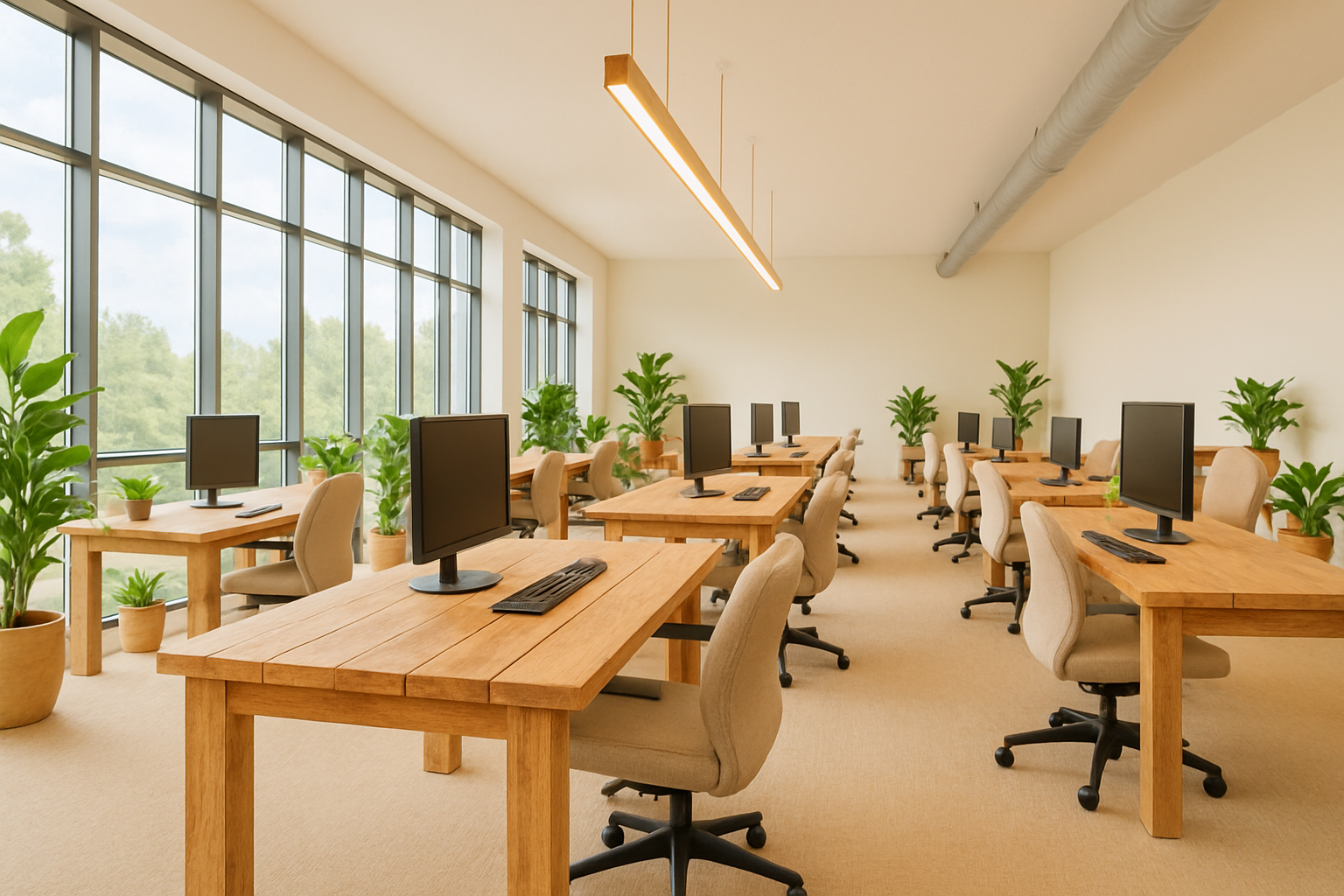
Biophilic design connects employees to natural elements, creating a workspace that feels alive and restorative. Studies show that even subtle touches of nature (plants, natural textures, and daylight) can improve focus, spark creativity, and reduce stress.
There are many ways to achieve this trend:
- Green walls and indoor gardens: Imagine walking past a vertical garden on your way to a meeting. The greenery not only softens the space visually but also has a calming effect, helping reduce stress and mental fatigue. Even small pockets of plants around workstations can make a significant difference in mood and focus.
- Natural light and air quality: Smart lighting systems that mimic natural daylight cycles, combined with improved ventilation, support circadian rhythms and overall health. Employees notice when a space feels fresh and bright; productivity and morale rise naturally in response.
- Material choices: Incorporating wood, stone, and other organic textures adds warmth and authenticity. Tactile surfaces that invite touch, like reclaimed wood desks or textured stone walls, create a sensory connection to the environment, making the office feel human rather than sterile.
In 2026, modern office design isn’t satisfied with decorative touches. Every plant, beam of sunlight, and natural surface serves a purpose: making work feel less like a grind and more like a space that supports mind and body alike.
Technology That Works Without Getting in the Way
Technology in a 2026 office is quiet, invisible, and smart. Meeting rooms sense when someone walks in, adjusting light, temperature, and air circulation automatically. Teams spread across continents can brainstorm together without a single glitch.
- Smart meeting rooms: Sensors detect who’s present, adjusting light, temperature, and even automatically starting presentations or video calls. No fiddling with remotes or schedules.
- Adaptive furniture: Desks that remember height preferences, chairs that offer posture reminders, and collaborative tables with built-in monitors. Small touches make comfort effortless.
- Data-driven space planning: Analytics quietly track room usage and traffic flow, helping teams understand where collaboration naturally happens and where focus areas are needed.
- Augmented and interactive tools: AR overlays and touchscreen boards let teams sketch, annotate, or prototype in real time, bridging the gap between in-office and remote employees.
- Invisible efficiency: Technology supports work rather than calls attention to itself. Employees experience smooth, frictionless workflows without thinking about the gadgets behind them.
2026 trends are moving toward creating an environment where ideas move freely, processes don’t get stuck in friction, and the office responds to the people inside it, almost like a quiet partner in every project.
Sustainability as a Design Imperative
Sustainability has moved from a bullet point on a checklist to the backbone of thoughtful office design. By 2026, it’s impossible to separate eco-consciousness from modern office design, from the floors you walk on to the systems quietly humming above.
- Recycled and responsibly sourced furniture: Desks made from reclaimed wood, chairs crafted from recycled plastics, and modular pieces that can be repurposed instead of replaced. These choices create a sense of history and care, not just efficiency.
- Low-VOC paints and natural finishes: Walls, trim, and flooring that smell fresh and feel healthier. These small details influence mood and well-being while reducing exposure to harsh chemicals.
- Energy-efficient lighting and smart systems: Motion sensors, daylight-responsive LEDs, and automated heating and cooling reduce consumption without anyone having to adjust a switch. Imagine walking into a room and the lights brighten to match the daylight cycle.
- Composting, recycling, and mindful consumption: Break rooms with clearly labeled bins, communal compost areas, and reusable dishware turn sustainability into an everyday habit. Employees notice these small practices and adopt them naturally.
- Culture of environmental responsibility: Sustainability becomes part of the office identity. Employees feel proud that the company is walking the talk, and clients remember a business that takes real action.
- Tangible benefits beyond eco: Lower energy bills, healthier air, and reduced waste all reinforce that green design is both practical and meaningful.
Even daily rituals, composting, recycling, and mindful consumption, become part of the office culture.
Sustainable design pays off in more ways than one. Employees notice when their workplace aligns with their values. Clients remember when a company goes beyond lip service. A green office reduces a carbon footprint and creates trust, pride, and satisfaction.
Co-Creation and Collaboration
Collaboration has left the conference room behind. In a 2026 office, ideas happen everywhere. Teams gather around modular tables with built-in screens, brainstorm on movable whiteboards, or use augmented reality overlays to visualize concepts in 3D.
- Modular collaboration zones: Tables on wheels, rolling whiteboards, and movable partitions let teams reconfigure the space instantly for brainstorming, presentations, or workshops.
- Integrated tech for real-time ideation: Built-in screens, AR overlays, and interactive walls let employees sketch, annotate, and prototype together, whether colleagues are across the room or across the globe.
- Workstyle-based seating: Designers sit with designers, marketers with marketers. Teams naturally gravitate toward those they collaborate with most, reducing friction and fostering flow.
- Shared resources that make life easier: Communal printers, tech toolkits, and prototyping kits remove barriers and keep ideas moving, rather than waiting for permission or access.
- Participation over presence: Employees aren’t just physically in the space, but they are engaged, taking initiative, and shaping solutions collectively. The office becomes a living, breathing creative organism.
- Dynamic, flexible ownership: Ideas are co-owned rather than top-down assignments. Teams feel responsible and empowered to move concepts from thought to action immediately.
The office becomes a living ecosystem of creativity. Employees aren’t just present, they’re engaged, contributing, and shaping solutions together in real time.
Personalization and Intentional Choices
Workspaces in 2026 feel human because they let people make choices. Need a quiet spot to focus? There’s a nook with a soft lounge chair, a laptop stand, and a small plant to reduce stress. Want to collaborate? Grab a movable table with rolling whiteboards and outlets built in. Feel like thinking without interruption? Step into a soundproof pod with natural light and a view of greenery.
Schedules, wellness programs, and professional development options also adapt to the individual. Furniture, lighting, and layout reflect the company culture but also the personalities of the people in it.
Meaningful choices make work feel alive rather than routine. Employees feel empowered, creative, and connected to their tasks, their teammates, and the office itself.
The Future of Modern Office Design
The top office design trends for 2026 show a clear direction: workspaces are adaptive, human-centered, and experience-driven. Offices should be functional, yes, but they also stand as cultural statements, talent magnets, and productivity engines.
From hybrid layouts and biophilic touches to immersive, tech-integrated spaces, modern office design is about creating environments that reflect both the people who work there and the communities they serve. Companies that embrace these trends will find they’ll receive incredible dividends in culture, well-being, and innovation.